
Book marketing ideas work when they connect the right reader with your story or solution. Pew Research Center reported in April 2026 that 75% of U.S. adults had read at least part of a book during the previous year. Reaching them takes more than announcing a release.
Book sales offer opportunity, but competition for attention is fierce. The Association of American Publishers estimated $33.4 billion in U.S. publishing revenue for 2025, including course materials. Your goal is to reach interested readers, not everyone who buys books.
Here you’ll discover practical promotion, launch planning, and cost controls. You’ll also learn how to find readers without a following and fix disappointing sales. Choose strategies that fit your audience and resources.
1. Start With Book Marketing Ideas That Improve Your Cover

Good marketing starts with a clear promise. Describe who your book serves and what it offers in one sentence. A thriller might promise a twisting mystery, while a business book might solve a costly workplace problem.
Study five successful titles in your category. Compare their covers, descriptions, prices, and reader expectations without copying their designs. Make your cover communicate its genre even at thumbnail size.
A specialist design tool can support this process. The KDP cover creator provides cover-design and formatting tools for print and digital books, as well as promotional mockups. Check your files against retailer specifications and test cover readability on a phone.
Pew’s 2026 analysis found that 64% of U.S. adults had read a print book in the previous year. The Association of American Publishers reported that print formats accounted for 76.3% of U.S. trade-publishing revenue in 2025. Physical presentation therefore matters, even when your advertising runs online.
Improve Your Book Page Before Buying Ads
Your retailer page must answer three questions quickly: What is this book, who is it for, and why should someone care? Open your description with an engaging hook, explain the stakes or benefits, and choose accurate categories and keywords. Avoid promises the manuscript cannot fulfill.
Must-know Tip: Association of American Publishers executive Syreeta Swann said, “Print formats continue to dominate Trade publishing.” That observation supports careful print presentation, not neglecting ebooks. Build a consistent sales message across every edition you offer.
2. Find Your First Readers Without A Large Audience
You can market a book with no followers or subscribers. Find genre discussions in libraries, newsletters, professional groups, and reader forums. Participate helpfully before asking anyone to buy.
Create a simple author website with a biography, book description, and email signup. Offer a relevant sample chapter, checklist, or short story to visitors who consent to receive messages. Welcome new subscribers with useful content.
For affordable book promotion ideas, begin with activities like these:
- Pitch a relevant talk to a library or community group.
- Offer a guest article or podcast interview.
- Exchange newsletter mentions with a compatible author.
- Provide discussion questions to an interested book club.
- Invite readers to preview a chapter.
Book clubs can help, but they are not the entire market. Pew reported in 2026 that only 7% of U.S. adults had participated in one during the previous year. Its October 2025 survey also found that 38% had read one to five books, making readers’ limited attention especially valuable.
Illustrative Case Study: Starting From Zero
Imagine Maya, a new regional-history author with no mailing list. She arranges two local talks, shares a downloadable history checklist, and tracks both subscriptions and book sales. She repeats the partnership that attracts interested readers.
Must-know Tip: The first goal is evidence of reader interest, not a large follower count. Ask early subscribers what attracted them to the book. Their answers can sharpen your description and future outreach.
3. Combine Social Media, Search, And Email Promotion
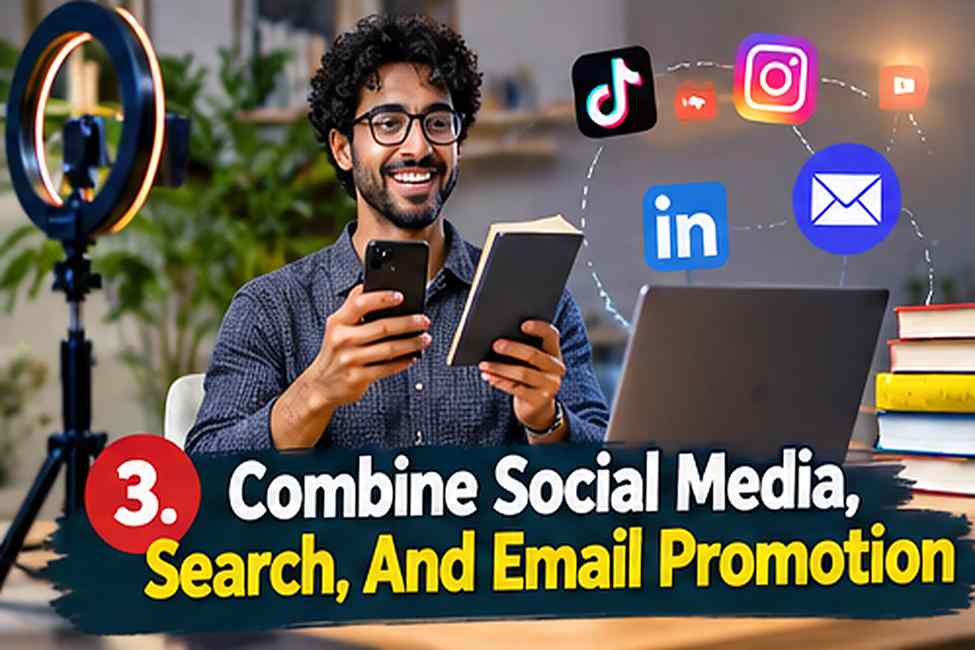
Social media book promotion should give people a reason to care. Fiction writers can introduce a character dilemma, setting, or recognizable trope. Nonfiction authors can demonstrate a useful lesson and explain the problem it addresses.
Choose a platform where your readers gather. Short videos may fit visually engaging fiction, while LinkedIn can suit professional nonfiction. Track clicks and email signups instead of judging every post by views.
Podcasts provide another route to relevant audiences. Edison Research’s Infinite Dial 2026 reported that 80% of Americans ages 12 and older had ever listened to or watched a podcast. It found that 58% had consumed one in the previous month, though reach does not guarantee sales.
Repurpose One Useful Idea Across Channels
Turn a compelling passage into a short video, newsletter paragraph, blog post, and interview question. Adjust each version to fit its audience rather than repeating a sales pitch. Direct interested people toward a helpful book page or signup form.
Search can keep bringing visitors long after a post disappears. Answer questions your target readers genuinely ask, publish useful content on your author website, and link relevant pages together. A fantasy writer might publish a series reading order, while a nonfiction author could explain a practical technique.
Must-know Tip: Reedsy marketing specialist Ricardo Fayet writes that “ads and virality only work once the foundations are in place.” Give each campaign a clear destination and useful offer. Your website and email list help sustain relationships begun elsewhere.
4. Build A Book Launch Marketing Plan That Lasts
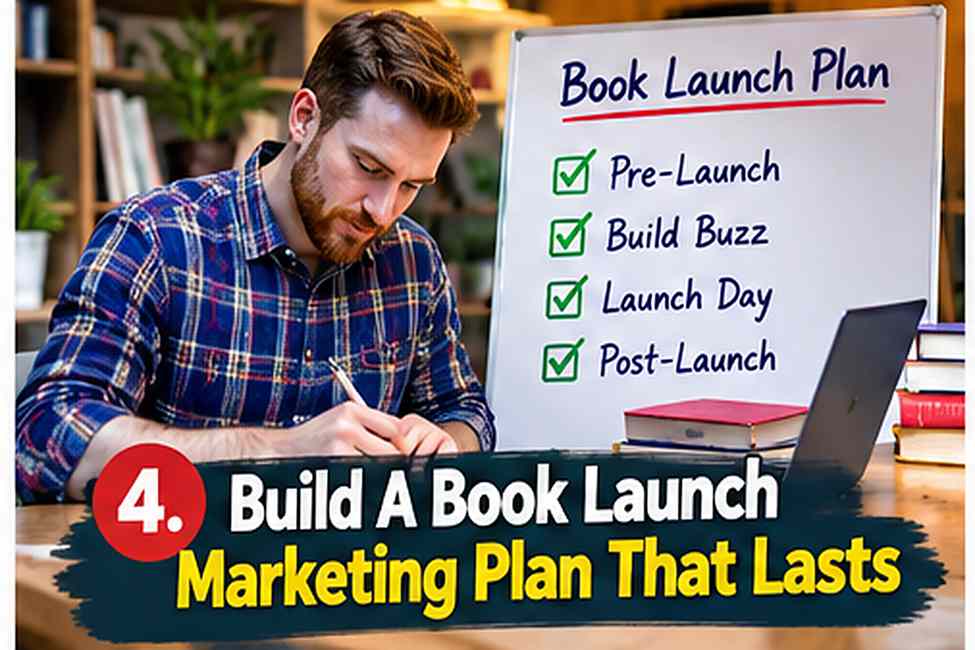
Book launch marketing works better when you spread tasks across several weeks. Begin about 10 to 12 weeks before publication to prepare your book page, promotional materials, and outreach. If release is closer, prioritize essentials.
A Simple 90-Day Book Launch Checklist
- Days 90–61: Define your reader, finish your description, and create a signup page.
- Days 60–31: Contact suitable reviewers, podcasts, and book communities.
- Days 30–8: Share previews, confirm events, and test buying links.
- Launch week: Email subscribers, publish your best content, and thank supporters.
- Days 8–30: Monitor response, follow up, and adjust weak messages.
Prepare advance reader copies responsibly. Amazon KDP permits free or discounted copies without requiring or influencing a review, but additional incentives such as gift cards can invalidate reviews. Request honest feedback, never positive ratings, and check each retailer’s policies.
Different formats need different marketing assets. Pew reported in 2026 that 31% of U.S. adults had read an ebook and 26% had listened to an audiobook during the previous year. The Association of American Publishers estimated $2.5 billion in digital-audio publishing revenue for 2025.
Must-know Tip: Launch day is the start of a measurement period, not the final verdict. Save campaign links and compare the response to each activity. Repeat the book advertising ideas that attract suitable readers.
After release, create fresh reasons to talk about your book. Offer a reading-group question, an interview angle, or a timely connection to its subject. Schedule the next outreach before launch-week excitement fades.
5. Test Book Advertising Ideas And Fix Poor Sales
Paid promotion can amplify a compelling book page, but it rarely repairs a weak one. Test one audience, message, and creative concept. Amazon Ads reach people browsing its marketplace, while social ads can introduce your book before shoppers search for it.
Know your royalty per sale before spending money. A $150 ad with $4 royalty per copy requires 38 attributable sales to break even. That excludes other costs and assumes purchases came from the campaign.
Set your testing budget according to what you can afford:
- $0: Improve metadata, collect legitimate feedback, and seek partnerships.
- $100: Test one targeted message and record costs.
- $500: Compare several creatives after initial evidence of interest.
- $1,000: Increase spending only on campaigns with promising economics.
According to the Association of American Publishers, U.S. adult-fiction trade revenue reached $7.1 billion in 2025. Adult nonfiction contributed $6.0 billion, while publisher revenue through online retail reached $12.3 billion. These market figures describe publishers collectively, not a sales forecast for your title.
Diagnose A Book That Is Not Selling
Few impressions suggest a discovery or targeting problem. Clicks without sales suggest a cover, description, sample, price, or audience mismatch. Try adjusting one factor at a time and record the results before investing more money.
Use tagged links where possible, then compare traffic, signups, advertising costs, and retailer reports. Sales cannot always be attributed precisely. Keep publishing useful content and building reader relationships after release.
Conclusion
Book marketing ideas succeed when they fit your readers and become manageable experiments. You do not need a huge following, expensive publicity, or every social platform to find buyers. You need clear positioning, strong presentation, a way to contact readers, and patience to learn.
Improve your retailer page and find one community where your readers gather. Create a useful offer, plan promotional activity, and set measurable goals. When results disappoint, identify whether the problem is discovery, conversion, or repeat readership before spending more.
Treat promotion as ongoing work rather than a single dramatic launch event, and record what genuinely connects with readers. Pick three ideas from this guide, set a goal for each, and test them over the next 30 days. The answers below can help you avoid common mistakes and turn your first steps into a sustainable approach.
Frequently Asked Questions About Book Marketing
How Do I Market A Book With No Audience?
Find relevant reader communities. Share useful content. Invite interested people onto your email list.
What Are The Best Free Book Promotion Ideas?
Improve your listing. Try libraries, interviews, and collaborations. Respect community rules.
How Much Should A New Author Spend On Marketing?
There is no minimum. Start small. Spend more only when results justify it.
Can I Promote A Book Without Social Media?
Yes, social platforms are optional. Use email, search, podcasts, and events. Choose sustainable activities.
Do Amazon Ads Work For Self-Published Authors?
Results vary. Test targeting and presentation. Compare royalties against ad costs.
How Do I Get More Honest Amazon Book Reviews?
Offer copies without requiring reviews. Request honest feedback. Follow Amazon’s incentive rules.
Why Is My Book Not Selling?
Check whether readers can find it. Then inspect the cover, description, sample, and price. Test improvements individually.
Is BookBub Better Than Amazon Ads?
They serve different purposes. BookBub has promotional placements and ads. Compare eligibility, costs, and your target audience.
Should I Hire A Book Marketing Agency?
Define your goals before hiring. Request clear deliverables and reporting. Avoid guaranteed bestseller claims and fake reviews.
How Long Should I Promote A Book?
Keep promoting while results justify the effort. Refresh messages and audiences periodically. Reassess costs and time regularly.