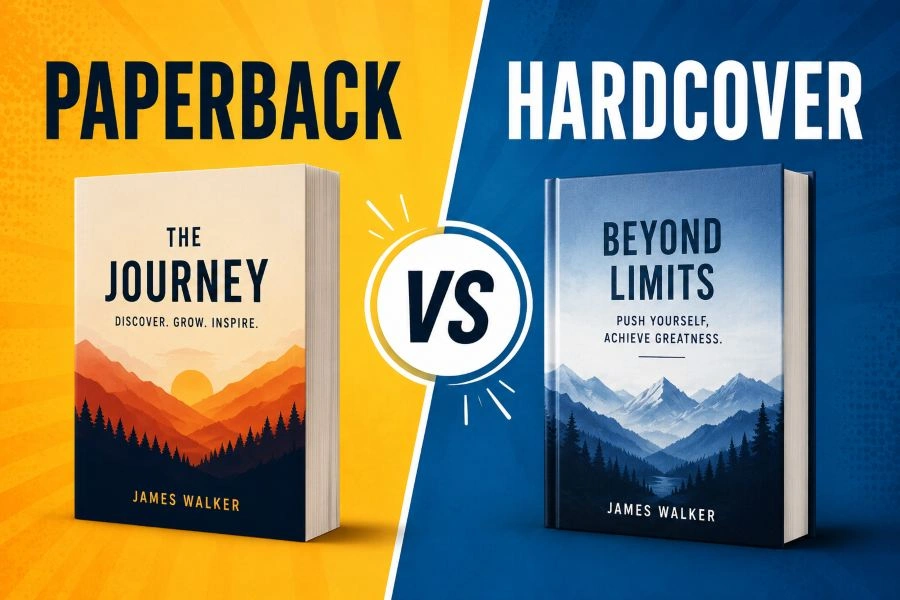
Paperback vs hardcover affects price, profit, shipping, reader comfort, shelf appeal, and how buyers judge your book before reading it. Paperbacks usually fit affordability, travel, quick updates, and wider access, while hardcovers fit durability, authority, gifting, and premium design. If you are publishing, buying, collecting, or comparing editions, the best format depends on the job the book must do.
Keep reading to get more information on this topic!
Paperback Vs Hardcover: Start With The Real Goal
Start with the reader’s need, not your personal preference. A paperback removes price friction and works when your goal is reach, while a hardcover raises perceived value and works when your goal is prestige. Your format also shapes cover size, spine width, trim size, and proofing rules, so tools that help you
create KDP books, and other publishing assets faster can reduce avoidable layout mistakes before you order proofs.
The U.S. publishing industry generated an estimated $32.5 billion in 2024, up 4.1% from 2023. Trade consumer books rose 4.4% to $21.2 billion, so format choices still matter in a large print-and-digital market.
Know The Physical Difference First
A paperback uses a flexible cardstock cover attached to the pages, usually with glued binding. A hardcover uses rigid boards covered with paper, cloth, laminate, or a dust jacket, which makes it stronger, heavier, and usually more expensive. That construction affects comfort, durability, shipping cost, and first impression.
Perfect-bound paperbacks suit novels, workbooks, guides, and everyday nonfiction. Case-bound hardcovers suit books that need long shelf life, stronger display value, or repeated handling. Sewn or reinforced binding can add strength, but it also raises cost.
Compare Price, Profit, And Buyer Resistance
Price creates the first buying barrier. A paperback often helps unknown authors, students, casual readers, and budget-conscious buyers say yes faster. A hardcover can justify a higher price only when the design, content, and audience support that premium.
In 2024, hardback and paperback formats together made up 72.9% of U.S. trade revenue, with each format producing about $7.7 billion. Hardbacks rose 3.6%, and paperbacks rose 3.0%, which shows both formats remain strong when matched to the right product.
Compare printing cost, wholesale discount, shipping, returns, damaged copies, and realistic sales volume. A cheaper paperback can earn more per campaign if it sells faster and costs less to fulfill.
Use Reader Psychology To Your Advantage
Readers buy the feeling attached to the object. A paperback says practical, approachable, and easy to start, while a hardcover says lasting, gift-worthy, serious, and collectible. One reader wants a copy for a commute, while another wants a copy that looks good on a shelf.
In 2024, U.S. print book units rose slightly to 782.7 million, the first annual increase in three years at Circana BookScan outlets. That rebound shows physical format still influences buying behavior.
Must-know Tip: Treat format as part of your offer. If the buyer’s moment is practical, remove friction with paperback, but if it is emotional or status-driven, hardcover can lift perceived value.
Choose By Genre And Use Case
Genre should guide the decision. Romance, thrillers, journals, devotionals, workbooks, short guides, and fast-moving how-to books often work well as paperbacks because readers want access and portability. Cookbooks, children’s books, memoirs, art books, photography books, business books, and coffee-table books often benefit from hardcover because design and durability matter.
Fast-changing topics need flexibility. Technology, health, finance, politics, and education books may need updates, so paperback can lower revision risk. Evergreen, visual, or sentimental books can justify hardcover.
Think About KDP, POD, And Distribution
Self-publishing changed the paperback vs hardcover decision because print-on-demand lets you test before holding inventory. Many authors launch paperback first, study reviews, improve the cover, then add hardcover when demand is proven. This protects cash and reduces waste.
KDP and other POD services often make paperback publishing easier, while hardcover options can have stricter trim sizes, higher base costs, and fewer finish choices. In 2024, digital trade formats made up 21.2% of trade revenue, digital audio grew 22.5%, and ebooks rose 1.8%, so print editions now compete beside strong digital formats.
Plan ISBNs, Editions, And Metadata
Each format is a separate product in the market. Paperback, hardcover, ebook, audiobook, large-print, and special editions may need separate identifiers, files, covers, prices, and metadata. If you treat them as one edition, listings and sales data can become confusing.
Plan the edition path before launch. Decide if hardcover is the main edition, a premium upgrade, a library edition, or a later collector version. Then make the description, categories, and price explain the difference clearly.
Must-know Tip: Choose the format that matches the promise of the book. Readers trust a book faster when the price, trim size, cover quality, and purpose all point in the same direction.
Decide Whether To Release One Format Or Both
You do not need both formats on day one. A paperback-first launch can help new authors reduce risk, build reviews, and reach price-sensitive readers. A hardcover-first launch can work for authors with a strong platform, a premium nonfiction brand, or a visual book.
A simultaneous launch can work when your audience naturally splits. Some readers want the lowest practical price, while others want the nicest version. In early 2025 AAP data, hardback trade revenue was up 4.4% year to date through April, while paperback revenue was down 7.1%, so study category behavior before copying old habits.
Factor In Shipping, Storage, And Returns
Hardcovers cost more to ship and store because they are heavier and bulkier. That matters if you sell signed copies, attend events, or ship direct to readers. A box of paperbacks is usually easier to move and restock.
Before ordering stock, estimate:
• Unit cost.
• Packaging and postage.
• Storage space.
• Damaged-copy risk.
• Return risk.
• Realistic event or online sales price.
Look At Design, Trim Size, And Finish
Design mistakes become more visible as the format becomes more premium. A paperback needs strong thumbnail readability, clean margins, and a cover that survives handling. A hardcover needs precise jacket layout, spine balance, case-wrap alignment, paper feel, and finish quality.
Trim size changes cost and comfort. A larger book may look more valuable, but it can raise printing and shipping costs. A smaller paperback can feel friendly and portable, but a high page count can create a thick spine.
Must-know Tip: Do not use hardcover to hide weak design. A premium format magnifies weak typography, poor spacing, low-resolution images, and unclear cover hierarchy.
Consider Sustainability And Waste
Sustainability is more complex than saying one format is always greener. A paperback may use less material per copy, while a hardcover may last longer in homes, schools, offices, and libraries. The better choice depends on how often the book will be used.
Print-on-demand can reduce waste because copies are produced closer to actual demand. Print what you can sell, choose responsible packaging, and avoid over-ordering because unsold books are wasteful in any format.
Build A Clear Decision-Making Checklist
Use a simple decision-making checklist before you publish or buy. Choose paperback if your reader is price-sensitive, carries books often, wants quick access, or expects updates. Choose hardcover if the book is visual, collectible, gift-worthy, durable, or tied to authority.
Mass-market paperback revenue fell 14.1% to $217 million in 2024, so the lowest-cost format is not always the safest choice. The better choice is the format that fits how your specific reader buys that type of book.
Final Verdict: Which Format Should You Pick?
Pick paperback when you want affordability, portability, faster testing, easier updates, and wider reach. It is often the stronger first choice for new authors, genre fiction, journals, guides, workbooks, and books aimed at daily use. It also lowers risk when your audience is still growing.
Pick hardcover when you want durability, authority, gift value, shelf presence, or a premium brand signal. It often suits art books, cookbooks, memoirs, children’s books, collector editions, and expert nonfiction. The best choice is the format your reader understands.
Conclusion
Paperback vs hardcover comes down to purpose, audience, and profit, not personal taste. Choose paperback when your main goal is reach, comfort, lower cost, faster updates, and easier distribution. Choose hardcover when your book needs durability, authority, gift value, or a premium shelf presence.
Many authors do best by launching paperback first, proving demand, then adding hardcover as a higher-priced edition. Others should lead with hardcover when the book is visual, collectible, or connected to a strong professional brand. Before you decide, compare production cost, shipping, ISBN needs, design quality, reader expectations, update plans, and sales channels. The right format makes your book easier to buy, easier to value, and easier to recommend.
FAQs About Paperback Vs Hardcover
Is Paperback Better Than Hardcover?
Paperback is better when you want a cheaper, lighter, and easier-to-carry book. Hardcover is better when you want strength, shelf life, and premium value.
Why Are Hardcover Books More Expensive?
Hardcover books use rigid boards, stronger binding, heavier materials, and better finishing. They also cost more to ship and replace.
Do Readers Prefer Paperback Or Hardcover?
Readers prefer paperbacks for everyday reading and hardcovers for gifts, display, collecting, and long-term use. The choice depends on the buying moment.
Should A First-Time Author Publish Paperback First?
A first-time author often benefits from paperback first because it lowers risk and helps gather early readers. Hardcover can come later when demand is clearer.
Can I Publish Paperback And Hardcover Together?
Yes, you can publish both together if your files, pricing, metadata, and budget are ready. Each format should have a clear purpose.
Which Format Is Better For KDP?
Paperback is usually easier and cheaper for KDP testing. Hardcover can work when your design is polished and your audience accepts a higher price.
Are Paperbacks Less Durable?
Paperbacks are usually less durable because covers bend and spines crease. High-quality paperbacks can still last well with normal care.
Which Format Is Best For A Business Book?
A business book can work well in hardcover when authority, speaking, or gifting matters. Paperback works better when price and volume matter more.
Do Libraries Prefer Hardcover?
Libraries often prefer durable formats because books pass through many hands. Budget, demand, and edition availability still affect the final choice.
Should I Make A Special Edition Hardcover?
A special edition hardcover makes sense for collectors, loyal fans, or gift buyers. Add value through design, paper, signed copies, or bonus content.